


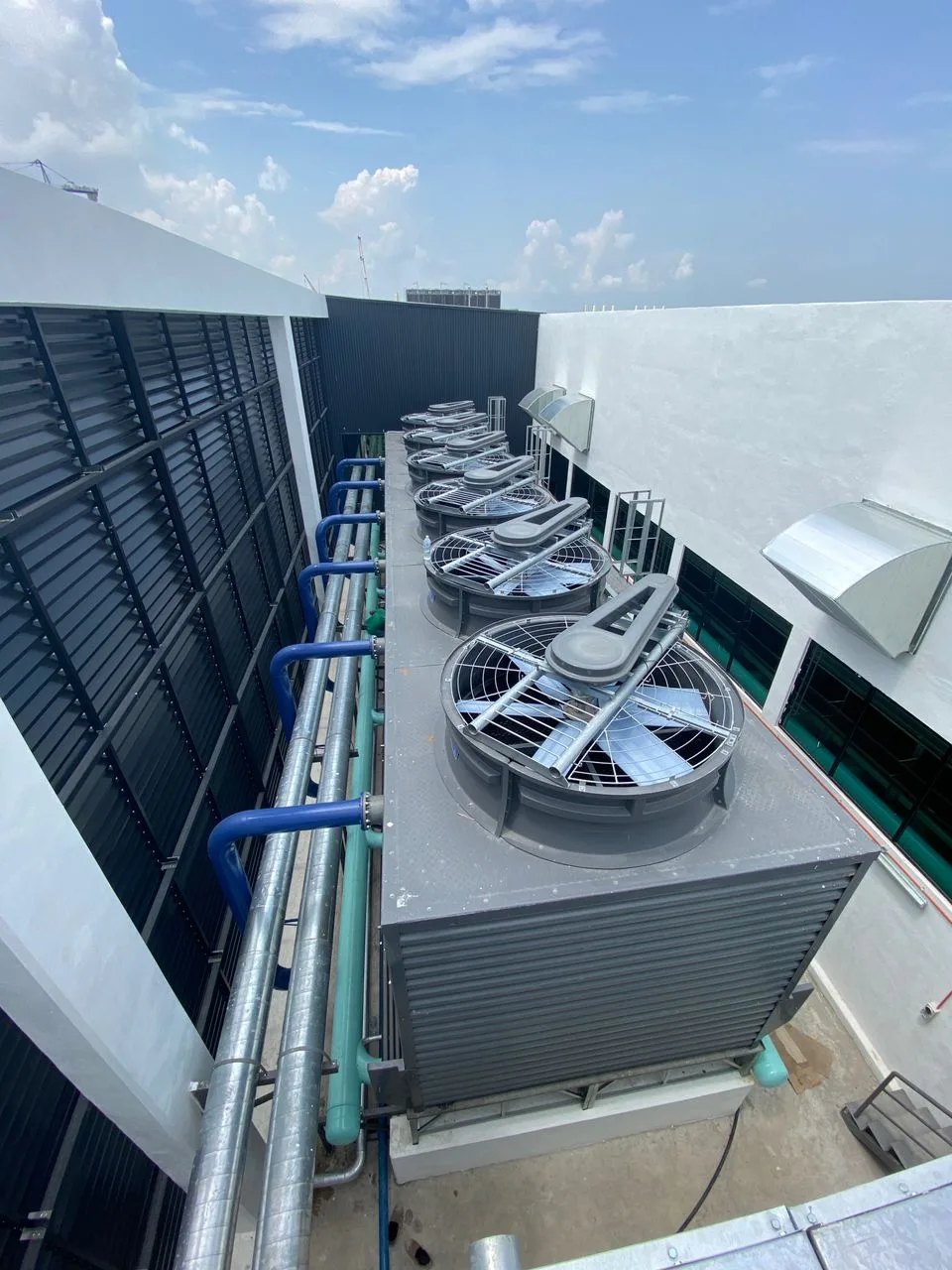
At Coolaire Engineering, we often get asked whether a building needs ventilation, air conditioning, or both. While the terms are sometimes used interchangeably, air ventilation systems and air conditioning systems serve distinct but complementary purposes — especially in Penang’s hot and humid climate.
Understanding the difference helps homeowners, business owners, and facility managers make informed decisions for comfort, energy efficiency, and indoor air quality.
What Is an Air Ventilation System?
An air ventilation system is the process of bringing fresh outdoor air into a building while removing stale indoor air. It plays a vital role in maintaining good indoor air quality, regulating humidity, and preventing the buildup of pollutants.
There are two main types of ventilation systems:
- Natural Ventilation
- Relies on windows, vents, or openings to allow air to flow naturally.
- Best suited for smaller buildings or spaces where airflow can be achieved without mechanical assistance.
- Mechanical Ventilation
- Uses fans, ducts, and filtration systems to circulate air efficiently.
- Often integrated into HVAC systems for precise control of temperature, humidity, and air purity.
- Essential for commercial buildings, industrial facilities, and cleanrooms in Malaysia’s hot and humid climate.
Example: A properly designed air ventilation system in Penang can remove excess heat and humidity, prevent mold growth, and improve comfort for employees and occupants. It’s a crucial investment for businesses looking to maintain a healthy, energy-efficient indoor environment.
What Is Air Conditioning?
Air conditioning (AC) focuses on temperature control. It cools indoor air, removes humidity, and keeps the environment comfortable during Malaysia’s warm weather.
Modern air conditioning systems, ranging from split units and VRF systems to centralized HVAC and chilled water setups, can also include filters to improve indoor air quality. However, their primary function is cooling and dehumidifying, not replacing stale indoor air.
In simple terms:
- Ventilation brings in fresh air from outside.
- Air conditioning cools, dehumidifies, and conditions the indoor air.
Ventilation vs. Air Conditioning: Key Differences
| Feature | Air Ventilation System | Air Conditioning System |
|---|---|---|
| Primary Function | Exchanges stale indoor air with fresh outdoor air | Cools, heats, and dehumidifies indoor air |
| Focus | Indoor air quality, humidity control, oxygen levels | Temperature comfort and humidity control |
| Usage | Factories, hospitals, offices, commercial spaces | Homes, offices, commercial, and industrial buildings |
| Technology | Ducts, exhaust fans, filters, mechanical or natural airflow | Split units, VRF, chillers, evaporators, refrigerants |
Why You Need Both Systems Working Together
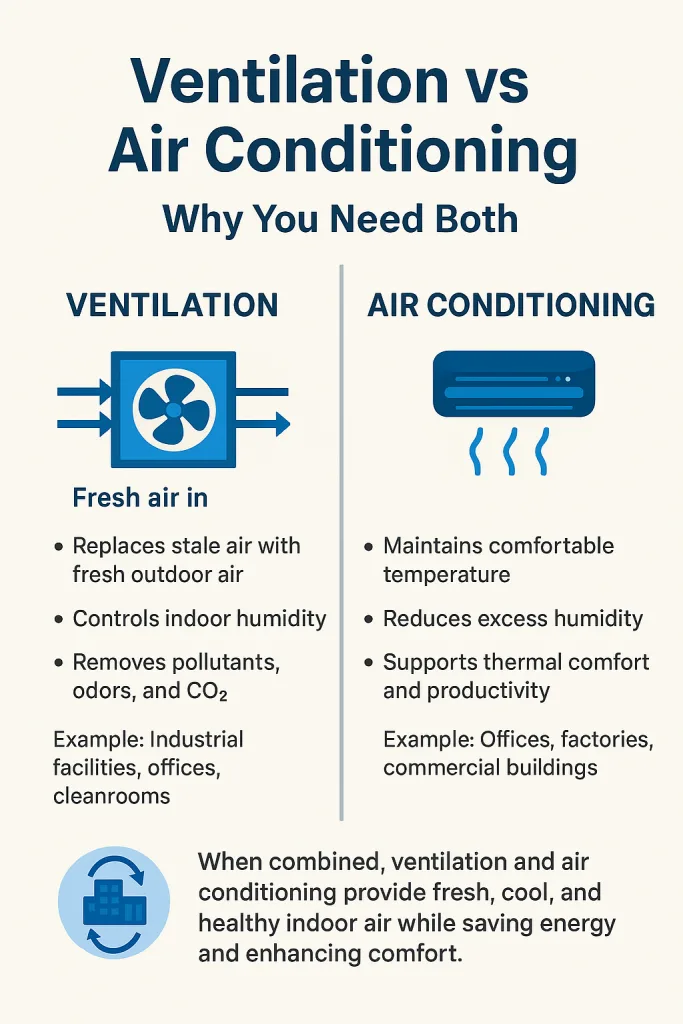
A common mistake is assuming air conditioning alone is enough for good air quality. However, without proper ventilation, the air inside your building can become stale, stuffy, or even contaminated.
Here’s why combining air ventilation and air conditioning is important:
- Better Air Quality – Ventilation removes indoor pollutants like dust, VOCs, and CO₂. Air conditioning maintains a comfortable temperature.
- Humidity Control – Ventilation helps regulate moisture, preventing mould and condensation.
- Energy Efficiency – A well-balanced system reduces strain on air conditioners, lowering energy bills.
- Comfort & Safety – Fresh, filtered, and cool air keeps occupants comfortable and productive — especially in cleanroom or industrial settings.
By designing systems that work together, businesses and homeowners in Penang can achieve optimal comfort, air quality, and energy efficiency.
How Coolaire Engineering Can Help
At Coolaire Engineering Sdn Bhd, we specialize in air ventilation systems and air conditioning services in Penang for commercial, industrial, and cleanroom facilities.
Our team ensures every HVAC project is designed for optimal airflow, energy efficiency, and long-term reliability. Whether you need a system upgrade, maintenance service, or a new installation, we provide complete solutions tailored to your building’s needs.
Learn more about our Heating, Ventilation, and Air Conditioning systems and how we can help you maintain a comfortable and healthy indoor environment.
Frequently Asked Questions (FAQs)
Can air conditioning replace ventilation?
No. Air conditioning cools and dehumidifies, but ventilation is needed to bring in fresh air and remove indoor pollutants.
How often should HVAC systems be serviced in Penang?
Commercial or industrial systems: generally every 6–12 months, depending on usage and environment.
Residential units: often once a year, or more frequently in humid or heavily used spaces.
Why combine ventilation and air conditioning in commercial buildings?
Combining both ensures better air quality, humidity control, energy efficiency, and occupant comfort.
How can Coolaire Engineering help?
We provide custom HVAC design, installation, and maintenance for residential, commercial, and industrial buildings in Penang.
Final Thoughts
Ventilation and air conditioning work hand in hand — one ensures fresh air circulation, while the other maintains the right temperature and humidity.
If you’re experiencing poor airflow, uneven cooling, or musty indoor air, it might be time to review your current system. Get in touch with Coolaire Engineering, your trusted HVAC and cleanroom contractor in Penang, for professional consultation and maintenance today.
📚 Also Read:
Disclaimer:
We hope you find this article helpful and informative. Our content is intended for general informational purposes only and does not constitute advice or necessarily reflect the full range of services offered by Coolaire Engineering Sdn. Bhd.
For personalized advice, please consult with a professional or contact us directly. While we strive for accuracy and completeness in our blog posts, we cannot guarantee they are error-free. Coolaire Engineering Sdn. Bhd. assumes no responsibility for any errors or omissions.