


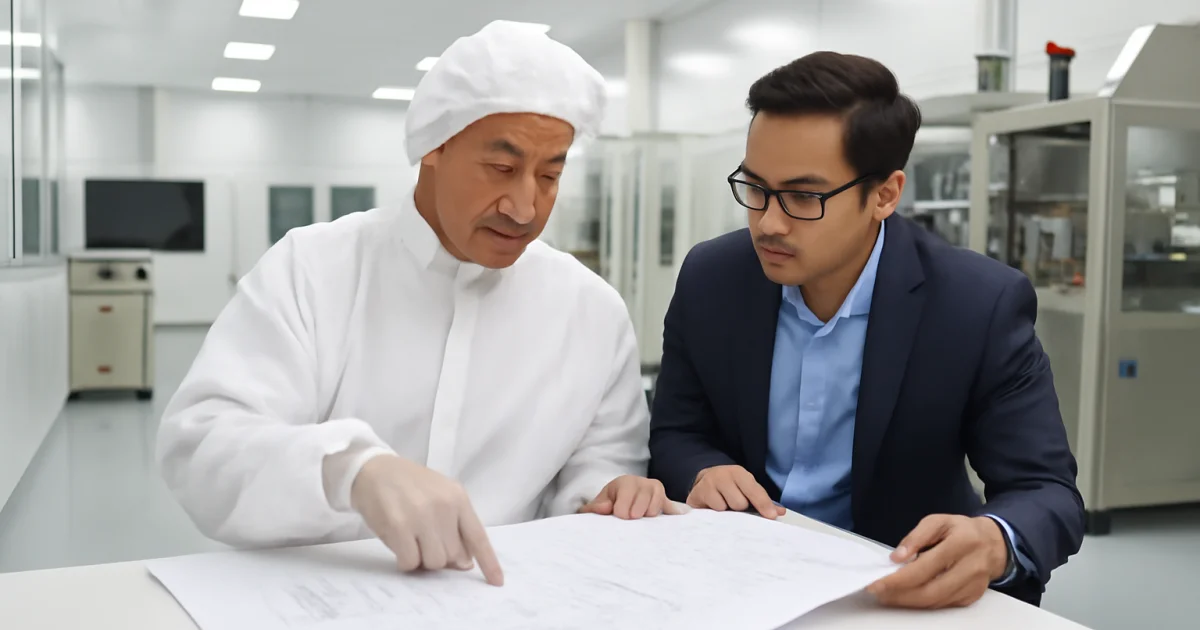
In Malaysia’s rapidly evolving microelectronics sector, the performance and reliability of your cleanroom facility directly impact product quality, yield, and regulatory compliance. Choosing the right cleanroom contractor Malaysia is a mission-critical decision for semiconductor manufacturers, electronics assembly plants, and high-tech R&D labs. This expert guide provides a comprehensive roadmap for evaluating, comparing, and selecting the best cleanroom contractor for your microelectronics facility expansion or new build.
Understanding the Importance of Specialized Cleanroom Contractors
Microelectronics cleanrooms require ultra-precise control over airborne particulates, temperature, humidity, and pressurization. Only contractors with in-depth knowledge of ISO cleanroom standards, advanced HVAC integration, and contamination control can deliver facilities that meet the stringent requirements of semiconductor and electronics manufacturing.
Partnering with an experienced cleanroom contractor ensures:
- Compliance with international standards (ISO 14644, GMP, etc.)
- Efficient project management from design to commissioning
- Reliable integration of cleanroom HVAC systems and process utilities
- Minimized risk of costly rework or operational downtime
For a deeper dive on cleanroom standards, see Cleanroom Standards In Malaysia: What You Need To Know Before Building.
Key Criteria for Selecting a Cleanroom Contractor in Malaysia
When evaluating potential contractors, consider these essential criteria:
- Proven Industry Experience: Prioritize contractors with a long-standing track record in cleanroom projects for microelectronics, semiconductors, and similar high-tech industries.
- Technical Expertise: Look for multidisciplinary capabilities—including cleanroom design, architectural integration, HVAC and ventilation engineering, electrical, and process piping.
- Project Portfolio: Assess their history of completed cleanroom projects, especially those similar in scale and process requirements to yours.
- Quality Assurance: Review their approach to materials selection, air cleanliness verification, and documentation for ISO certification.
- After-Sales Support: Ensure strong technical support, maintenance, and troubleshooting services post-handover.
Choosing a contractor who ticks all these boxes reduces risk and sets your project up for long-term operational excellence. For more questions to ask, see Questions To Ask Before Hiring A Cleanroom Contractor In Malaysia.
Evaluating Cleanroom Design and Engineering Capabilities
Advanced microelectronics facilities demand more than just standard cleanroom spaces. Critical engineering elements include:
- Custom Cleanroom Layouts: Optimized for process flow, personnel movement, and equipment placement.
- HVAC & Ventilation Systems: Precision temperature, humidity, and particulate control, often with advanced filtration and redundancy.
- Process Utility Integration: Provisioning for compressed dry air, vacuum, process water, and specialty gases.
- Control & Monitoring: Building Management Systems (BMS) for real-time tracking of environmental conditions and equipment status.
Top-tier cleanroom contractors offer end-to-end design-build services, streamlining coordination between architectural, mechanical, and electrical disciplines. Explore Microelectronics Cleanroom solutions for detailed scope examples.
Comparing Project Management and Delivery Processes
Successful cleanroom construction hinges on effective project management, from initial concept through commissioning. Ask prospective contractors about:
- Site Assessment and Feasibility: How do they evaluate your facility needs and existing infrastructure?
- Detailed Scheduling: Can they present a clear timeline from design to handover, with milestones and risk mitigation?
- Material Sourcing: Do they use proven, contaminant-free materials suitable for cleanroom environments?
- Regulatory Compliance: How do they document and validate compliance with ISO and local standards?
- Commissioning and Validation: What procedures do they use for system testing, air cleanliness checks, and staff training?
Well-established contractors provide transparency, regular progress updates, and rigorous quality controls throughout the project lifecycle.
Assessing Cleanroom HVAC System Expertise
For microelectronics, the cleanroom HVAC system is the heart of environmental control. Your contractor should demonstrate:
- Experience with Cleanroom HVAC System Malaysia: Including design and installation of HEPA/ULPA filtration, laminar airflow, and pressure cascades.
- Industrial Air Conditioning System Knowledge: Tailored for high-precision processes with robust humidity and temperature control.
- Energy Efficiency: Use of advanced controls, energy recovery, and monitoring to optimize operational cost.
- Redundancy and Reliability: Backup systems to guarantee uptime for critical operations.
Contractors with deep HVAC expertise, such as those recognized as a leading HVAC Contractor Malaysia, can deliver both performance and efficiency—reducing long-term maintenance costs.
Practical Example: End-to-End Cleanroom Project Delivery
Consider a semiconductor manufacturer planning a 1,000 m² ISO Class 5 cleanroom for wafer fabrication. The right contractor will:
- Conduct on-site surveys, airflow modeling, and contamination risk assessment.
- Design a modular cleanroom layout with dedicated gowning, material transfer, and equipment maintenance zones.
- Specify and install a high-performance HVAC and filtration system with integrated BMS for real-time monitoring.
- Coordinate mechanical, electrical, and process utility works to eliminate interface risks.
- Validate the facility against ISO 14644 standards, train staff, and provide post-handover technical support.
This approach ensures the facility meets production, regulatory, and business needs from day one. For more on modular options, see Modular Vs Conventional Cleanrooms: What Works Best In Malaysia.
Case Study: Avoiding Common Cleanroom Contractor Pitfalls
Many companies in the microelectronics sector have faced costly setbacks by underestimating the complexities of cleanroom projects or choosing contractors without sufficient technical depth. For instance, a mid-sized electronics firm in Penang experienced significant delays and contamination issues after hiring a contractor lacking experience with high-precision HVAC integration. The result was months of rework, regulatory fines, and lost production revenue.
To avoid such pitfalls, it’s essential to:
- Vet contractors for relevant project experience and up-to-date certifications.
- Review case studies and references from similar industries or projects.
- Request clear quality assurance documentation and environmental control strategies.
- Establish escalation procedures for problem resolution during and after construction.
Learning from others’ mistakes can be as valuable as understanding best practices. Make sure your contractor selection process is robust and transparent.
Comprehensive Checklist for Cleanroom Contractor Evaluation
To streamline your decision-making process, use the following checklist when shortlisting cleanroom contractors:
- Does the contractor have a minimum of five years’ experience in microelectronics cleanroom projects?
- Can they provide references and facilitate site visits to operational cleanrooms?
- Do they employ in-house engineers specializing in cleanroom HVAC and contamination control?
- Is their project portfolio relevant and current, with similar scale and technical requirements?
- Are their materials and construction methods compliant with ISO 14644 and GMP?
- Do they offer comprehensive after-sales support, including preventive maintenance?
- Is their project management approach proactive, with transparent communication and documentation?
- Have they demonstrated success navigating regulatory approvals in Malaysia?
Having a structured evaluation process reduces risk and increases the likelihood of project success, minimizing surprises and delays.
Cost Considerations and Budgeting for Cleanroom Projects
Budgeting for a microelectronics cleanroom involves more than just the initial construction costs. Consider the following factors:
- Design Complexity: Higher ISO classes, modular construction, and specialized utilities increase costs.
- Material Selection: High-quality, low-particulate materials and finishes may have upfront premiums but offer long-term savings in maintenance and compliance.
- HVAC and Filtration: Advanced HVAC, HEPA/ULPA filtration, and BMS integration represent a significant portion of the budget but are essential for performance.
- Validation and Commissioning: Comprehensive testing, documentation, and training are critical for regulatory sign-off and operational readiness.
- Lifecycle Costs: Energy efficiency, ease of maintenance, and scalability should be factored into the total cost of ownership.
Request detailed breakdowns from contractors and compare total value, not just upfront price. Sometimes, the lowest bid may indicate corners being cut on critical engineering or compliance elements.
Innovations in Cleanroom Technologies for Microelectronics
Leading cleanroom contractors in Malaysia are leveraging new technologies to enhance performance, reduce costs, and future-proof facilities. Innovations include:
- Modular Cleanroom Systems: Prefabricated panels and modular layouts allow rapid deployment, flexible reconfiguration, and reduced construction timelines.
- Smart Building Management: IoT sensors and cloud-based BMS platforms enable real-time monitoring of air quality, temperature, humidity, and energy consumption.
- Energy Recovery Ventilation: Advanced HVAC systems now feature heat recovery and demand-controlled ventilation to minimize operational costs and reduce environmental impact.
- Enhanced Contamination Control: Improved gowning protocols, air shower systems, and antimicrobial surfaces further reduce particle loads and risk of product contamination.
When evaluating a contractor, inquire about their experience with these technologies and how they can integrate them into your project for maximum long-term benefit.
Best Practices for Cleanroom Contractor Selection
To maximize your project’s success:
- Request Detailed Proposals: Including technical specifications, project schedules, and reference projects.
- Visit Reference Sites: Tour completed cleanroom facilities to witness quality and operational performance firsthand.
- Check Certifications: Ensure the contractor is certified for relevant standards and has experience with audits.
- Prioritize Communication: Choose a partner who provides clear updates and collaborative problem-solving.
- Review After-Sales Services: Confirm ongoing maintenance, troubleshooting, and upgrade support.
For more decision insights, see Choosing The Right Cleanroom Contractor In Penang.
Additional Considerations: Compliance, Safety, and Future Expansion
When selecting a cleanroom contractor, don’t overlook the importance of health and safety protocols, compliance with evolving local regulations, and the ability to support future facility upgrades. Leading contractors proactively address issues such as safe work practices, on-site risk assessments, and staff safety training to prevent accidents during construction. Ask each candidate how they handle regulatory updates, and whether their designs are adaptable for future equipment or process changes.
Consider also the contractor’s ability to support facility expansion. Microelectronics manufacturers often need to scale up quickly to meet market demands. A contractor experienced in modular or phased construction can provide solutions that minimize operational disruption and align with your business growth plans.
Scenario Analysis: Comparing Two Contractor Approaches
Let’s compare two hypothetical contractor proposals for a new ISO Class 6 cleanroom in a Penang electronics assembly plant:
- Contractor A: Offers a fast-track modular cleanroom build with integrated HVAC and process utilities, detailed project scheduling, and a 24/7 technical support hotline. Includes provisions for future expansion, and provides clear documentation for all regulatory requirements.
- Contractor B: Proposes a conventional build with basic HVAC integration and limited after-sales support. Project documentation is less detailed, and the timeline is less certain. No clear strategy for scaling the facility in the future.
In this scenario, while Contractor B may present a lower initial quote, Contractor A’s approach offers superior value through faster commissioning, lower long-term risk, and easier expansion—key factors for a competitive microelectronics operation. Decision makers should weigh these trade-offs carefully rather than focusing solely on upfront cost.
Why Partner with Coolaire Engineering for Microelectronics Cleanrooms?
Coolaire Engineering stands out as a trusted cleanroom contractor in Malaysia with over 20 years of experience delivering world-class cleanrooms, HVAC solutions, and integrated facility engineering for the semiconductor and microelectronics sector. Our multi-disciplinary team handles projects from design and build to system commissioning and after-sales support, with a proven portfolio of over 500 completed projects and 200,000 m² of built cleanroom space.
- Specialized in ISO-compliant microelectronics cleanrooms
- Strong expertise in cleanroom HVAC, air conditioning ventilation, and process utility integration
- Customizable, energy-efficient engineering solutions
- Comprehensive project management and quality assurance
- Dedicated after-sales technical support and maintenance
To explore tailored solutions for your facility, reach out to Coolaire Engineering’s cleanroom experts today.
Conclusion: Setting Your Microelectronics Facility Up for Success
Investing in the right cleanroom contractor is one of the most important decisions for any microelectronics manufacturer in Malaysia. By focusing on proven expertise, integrated engineering, rigorous quality controls, and strong after-sales support, you can ensure your new facility meets the highest standards for production quality and regulatory compliance.
Ready to take the next step? Consult with Coolaire Engineering to discuss your project requirements and discover how our experienced team can deliver the cleanroom solution that powers your business growth.
Frequently Asked Questions
What qualifications should a cleanroom contractor have for microelectronics projects?
A reputable cleanroom contractor should demonstrate proven experience with microelectronics or semiconductor projects, knowledge of ISO 14644 and GMP standards, in-house engineering capabilities for HVAC, ventilation, and process utilities, and a strong portfolio of completed cleanroom installations. Certifications, compliance documentation, and references from similar projects are also essential.
How does a cleanroom HVAC system differ from standard air conditioning systems in Malaysia?
A cleanroom HVAC system is engineered for much tighter control of particulates, temperature, humidity, and pressure compared to standard air conditioning systems. It typically includes HEPA or ULPA filtration, laminar airflow, redundancy for critical operations, and integration with building management systems to meet strict microelectronics manufacturing requirements.
What are the key stages in a cleanroom project for the semiconductor industry?
Key stages include site assessment and feasibility study, custom cleanroom design, engineering of HVAC and process utilities, material sourcing, construction and installation, commissioning and validation (such as particle count and airflow testing), staff training, and ongoing maintenance and support.
Why is after-sales support important when choosing a cleanroom contractor?
After-sales support ensures that your cleanroom facility remains compliant, efficient, and operational after handover. Reliable contractors provide technical assistance, system servicing, troubleshooting, and can upgrade or adapt systems as production needs evolve, minimizing costly downtime.
Can one contractor handle both cleanroom construction and HVAC system integration in Malaysia?
Yes. Leading contractors like Coolaire Engineering offer end-to-end solutions, managing both cleanroom construction and the integration of advanced HVAC, ventilation, and utility systems. This integrated approach streamlines project delivery, reduces interface risks, and ensures optimal performance.
Ready to Build a World-Class Microelectronics Cleanroom?
Partner with Coolaire Engineering—Malaysia’s trusted cleanroom and HVAC contractor—to design, build, and maintain your next-generation microelectronics facility. Our team delivers ISO-compliant cleanrooms, advanced HVAC and ventilation systems, and comprehensive engineering solutions tailored to the semiconductor industry. Ensure production quality, energy efficiency, and long-term reliability with Coolaire’s complete design-to-build service and after-sales support.
Disclaimer:
We hope you find this article helpful and informative. Our content is intended for general informational purposes only and does not constitute advice or necessarily reflect the full range of services offered by Coolaire Engineering Sdn. Bhd.
For personalized advice, please consult with a professional or contact us directly. While we strive for accuracy and completeness in our blog posts, we cannot guarantee they are error-free. Coolaire Engineering Sdn. Bhd. assumes no responsibility for any errors or omissions.